

For a breakdown of Southern African transactions, visit our Dealmaker’s Log.
Climate Fund Managers has secured approval for $140 million in catalytic financing from the Green Climate Fund (GCF) for Climate Investor Three (CI3), its global blended finance facility focused on industrial decarbonisation, including green hydrogen infrastructure in Southern Africa. The catalytic investment will help mitigate project risks, supporting CI3 in mobilising additional private capital towards its $1.2 billion fundraising target.
Its diversified portfolio approach allows CI3 to invest across renewable energy generation, production, transport and end-use infrastructure, supporting the development of integrated industrial value chains. Its blended finance model combines public and private capital, using catalytic funding to mitigate risks and enable institutional and commercial investors to participate. Its development tranche finances early-stage project development, while its construction equity tranches provide equity capital to support projects through construction.
CI3 invests through two country-specific Climate Fund Managers’ affiliates: the SA-H2 Fund (SA-H2) in South Africa and SDG Namibia One Fund (SDG Namibia One) in Namibia. Of the $140 million approved, $84 million will be allocated to SA-H2’s construction equity tranche, while $56 million will go to SDG Namibia One – $15 million for its development tranche and $41 million for its construction equity tranche.
SA-H2 is managed by SA-H2 Fund Managers, a joint venture between Climate Fund Managers and Invest International, a Dutch impact investor owned by the Dutch state and development bank FMO. SDG Namibia One is managed by Namibia Energy Transition Fund Managers, a partnership between Climate Fund Managers, Invest International and the Environmental Investment Fund of Namibia (EIF).
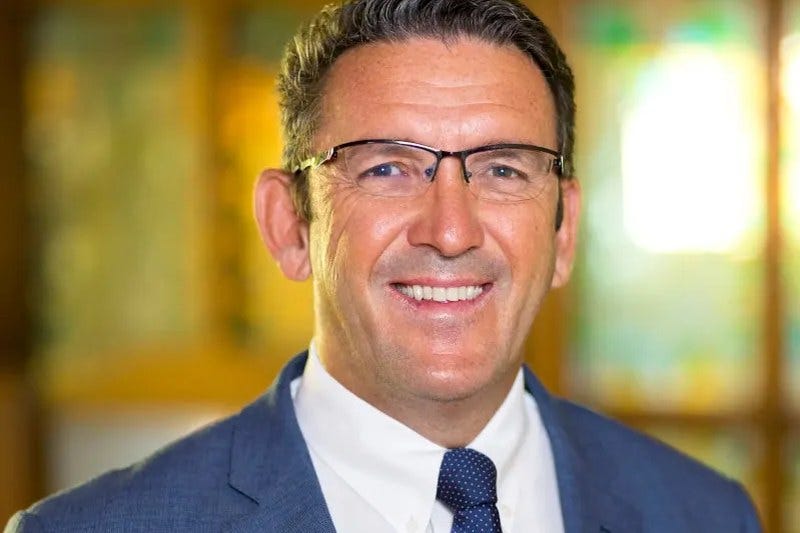
Andrew Johnstone, chief executive officer of Climate Fund Managers, said: “CI3 marks an important milestone in Climate Fund Managers’ journey of directing capital, through innovative financing structures, into commercial investments designed to mitigate the causes of climate change and help societies adapt to the consequences we witness every day around us. Decarbonising heavy industry is essential to achieving global climate goals and presents a significant investment opportunity. Yet the scale and complexity of these projects create financing challenges, particularly during development and construction. By helping to mitigate these risks, GCF’s catalytic financing can attract institutional investment into commercially viable projects and support competitive, low-carbon industrial growth.”
Catherine Koffman, regional director for Africa at GCF, said: “The Southern African Industrial Decarbonization Facility is GCF’s first platform dedicated to decarbonising industrial value chains in Africa. By deploying catalytic first-loss equity where risk is highest, the facility aims to unlock a target $1.2 billion programme across South Africa and Namibia, finance 30 to 40 projects, install about 1.52 GW of renewable energy and avoid an estimated 24.2 million tonnes of emissions. It offers a scalable model for competitive, low-carbon industrial growth.”
Jeroen Plag, chief investment officer at Invest International, said: “The approval of GCF’s investment is an important step in accelerating industrial decarbonisation in Southern Africa. Through SA-H2 and SDG Namibia One, we are supporting the build out of infrastructure and the creation value chains needed for a competitive low-carbon economy. This commitment demonstrates how concessional climate finance can reduce risk and mobilise additional investment at scale, enabling projects that deliver both climate impact and sustainable economic growth.”
Benedict Libanda, chief executive officer of EIF, said: “Namibia has significant potential to develop green hydrogen and associated industries, but realising that potential requires capital, specialist expertise and meaningful Namibian participation. SDG Namibia One brings these elements together, combining international investment with local knowledge and an understanding of national priorities. GCF’s catalytic financing will help build on this foundation, advancing projects that can create jobs, support industrial development and contribute to Namibia’s transition to a low-carbon economy.”
Want to know who is raising, investing, and exiting in Africa? Get Africa Private Equity News’ monthly Dealmaker’s Log – a database of reported investment deals, exits, and fundraising closes. Access the latest Dealmaker’s Log here